
 English
 German
 French
 Russian
 Spanish
 Japanese
 Korean
 Portuguese
 Ukrainian
 Arabic
 Italian
Are Copper-Coated Vacuum Chambers More Effective than Standard Vacuum Insulation?
When it comes to long-lasting temperature retention, the choice between copper-coated vacuum chambers and standard vacuum insulation is a critical technical decision. As a manufacturer of insulated water bottles and vacuum flasks, SOHAI HOUSEWARES CO., LTD. understands the importance of delivering products that maintain temperature over extended periods. In this article, we explore the technical differences and evaluate which solution offers superior performance.
Understanding Vacuum Insulation
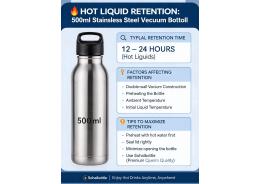
Standard vacuum insulation involves a double-walled container with a vacuum between the inner and outer layers. This vacuum eliminates heat transfer by conduction and convection, making it one of the most effective insulation methods available. The result is excellent temperature retention for both hot and cold beverages.
The Role of Copper Coating
A copper-coated vacuum chamber adds a thin layer of copper, usually on the inner wall, to reflect radiant heat back into the liquid. Since vacuum already blocks conductive and convective heat transfer, the copper coating specifically targets radiative heat loss. This can be particularly beneficial for slow temperature changes over many hours.
Comparison of Effectiveness
In theory, a copper-coated vacuum chamber can be more effective than a standard vacuum chamber because it reduces a third mode of heat transfer – radiation. However, the actual performance depends on factors such as the quality and thickness of the copper layer, the vacuum level, and the overall construction. In practice, the difference may be modest but measurable, especially when the temperature difference between the contents and the environment is large.
SOHAI focuses on innovative design and high-quality production, which are key attributes for achieving optimal insulation. While not all products may use copper coating, the company's commitment to quality ensures that its standard vacuum insulation products meet rigorous performance standards.
Additional Technical Considerations
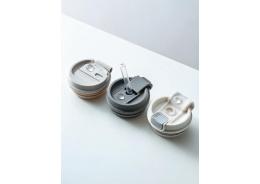
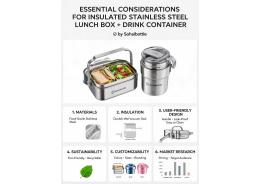
Beyond insulation, material safety and leak-proof design are essential for any high-quality insulated container. Food-grade stainless steel materials, such as those used in SOHAI's Stainless Steel Containers and Vacuum Flasks, ensure that no harmful substances come into contact with beverages. A reliable leak-proof design, typically achieved with silicone gaskets and precision-engineered lids, is equally important for user convenience and safety.
Conclusion
For long-lasting temperature retention, copper-coated vacuum chambers can offer an advantage over standard vacuum insulation by minimizing radiative heat loss. However, the difference is not always dramatic, and a well-made standard vacuum flask can already deliver excellent performance. When choosing a product, consider the overall build quality, materials, and design. SOHAI HOUSEWARES CO., LTD. provides a range of insulated products that prioritize both performance and safety, making them a trusted choice for daily hydration.