
 English
 German
 French
 Russian
 Spanish
 Japanese
 Korean
 Portuguese
 Ukrainian
 Arabic
 Italian
Are There Limitations on Design Complexity for Custom OEM or ODM Drinkware Projects?
When embarking on a custom OEM or ODM drinkware project (such as water bottles, tumblers, or coffee mugs), one of the most common questions from brands and businesses is: “How complex can our design be?” At Sohaibottle, we specialize in turning creative drinkware concepts into production-ready products—but like any manufacturing process, there are nuanced factors that shape design feasibility. Let’s explore the key considerations around design complexity in custom drinkware manufacturing.
1. Manufacturing Process Constraints
Different drinkware production methods (injection molding, blow molding, metalworking, or glassblowing, for example) have inherent limitations. For instance:
- Injection Molding: Intricate undercuts, extremely fine textures, or overly complex 3D geometries may require specialized (and costly) mold designs or may not be moldable at all. Sohaibottle’s engineering team works with clients to optimize designs for moldability, balancing creativity with manufacturability.
- Surface Finishing: Techniques like UV printing, electroplating, or laser engraving have resolution limits. Hyper-detailed artwork with tiny text or ultra-fine patterns might lose clarity during production. Our team provides pre-production samples to test complex designs.
- Assembly Requirements: Multi-component drinkware (e.g., bottles with nested lids, integrated straw systems) must have designs that allow for efficient assembly. Overly complex part connections can increase production time and defect rates.
2. Material Properties & Design Compatibility
The choice of material (plastic, stainless steel, glass, ceramic) also dictates design boundaries:
- Plastics (PP, Tritan, PET): While versatile, some plastics have flow limitations during molding. Extremely thin walls or irregularly shaped cavities can cause warping or incomplete fills.
- Stainless Steel: Deep, complex embossing or etching may be restricted by the metal’s thickness and malleability. However, Sohaibottle’s advanced metalworking techniques (like hydroforming) expand possibilities for curved or textured steel designs.
- Glass: Intricate, fragile designs (e.g., ultra-thin, multi-faceted shapes) increase the risk of breakage during production or shipping. Our team recommends design tweaks to enhance structural integrity without compromising aesthetics.
3. Cost, MOQ, and Design Complexity Trade-Offs
Complexity often correlates with cost and minimum order quantities (MOQ):
- Tooling Costs: Highly complex designs require custom molds, dies, or fixtures—driving up upfront tooling expenses. Sohaibottle helps clients prioritize design elements to balance uniqueness and budget, offering cost-effective alternatives (e.g., standard mold modifications vs. fully custom molds).
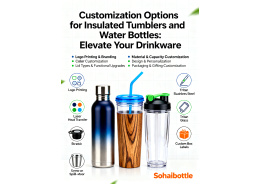
- MOQ Sensitivity: Intricate designs may only be feasible at higher MOQs (since specialized production runs are more efficient at scale). For smaller brands, we suggest modular design approaches (e.g., customizing a standard bottle shape with unique branding) to reduce complexity and MOQ.
4. Regulatory & Functional Requirements
Drinkware must meet safety and usability standards (e.g., FDA food contact compliance, leak-proof seals for lids):
- Safety Compliance: Complex lid mechanisms or textured surfaces must still be easy to clean (to meet hygiene standards). Our R&D team ensures designs align with global safety regulations without sacrificing creativity.
- Usability: Overly complex ergonomics (e.g., awkward grips, hard-to-operate lids) can hurt user experience. Sohaibottle conducts usability testing to refine complex designs into functional, user-friendly products.
How Sohaibottle Overcomes Complexity Challenges
At Sohaibottle, our strength lies in collaborative design engineering. Here’s how we turn complex visions into reality:
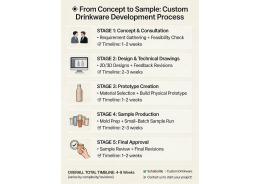
- Prototyping & Iteration: We create 3D prototypes and physical samples to test complex designs, identifying and resolving issues early (e.g., mold flow issues, structural weaknesses).
- Material & Process Innovation: Leveraging advanced manufacturing technologies (like hybrid molding, precision machining, or sustainable materials), we push the boundaries of what’s possible—even for highly customized projects.
- Custom Solutions for Unique Needs: Whether you need a bottle with a patented locking mechanism, a tumbler with multi-layer insulation, or a glassware line with artisanal details, our team collaborates with you to find feasible, cost-effective solutions.
Conclusion: Complexity Is Flexible, Not Fixed
While design complexity in OEM/ODM drinkware does have constraints, these limits are not absolute—they’re shaped by manufacturing expertise, material science, and budget. At Sohaibottle, we don’t view complexity as a barrier, but as a challenge to solve with innovation. If you’re wondering whether your bold drinkware design is feasible, reach out to our team: we’ll analyze your concept, outline trade-offs, and guide you toward a production-ready solution that balances creativity, functionality, and cost.